
Palmer Estate Law · South Tulsa
A Practical Guide to
Estate Planning
in Tulsa, Oklahoma
Clear, personal guidance for Oklahoma families — built around your real life, your property, and the people you trust.
Estate planning is often described as a collection of documents.
A will. A trust. A power of attorney. An advance directive.
Those documents matter. But they are only useful if the plan actually works when you or your family needs it.
Palmer Estate Law helps individuals and families in Tulsa create estate plans around real life. That means looking beyond a checklist and thinking about what you own, how your property is titled, who would realistically step in for you, where important information is kept, and whether the people you choose could actually carry out the responsibilities you are giving them.
For one family, the biggest concern may be naming guardians for young children. Another family may be trying to coordinate a revocable living trust with a home, investment accounts, and a family business. Someone else may already have a will that was signed fifteen years ago when their children were still minors.
Attorney Allie Palmer works directly with clients to understand that full picture before determining which estate planning tools may fit their goals.
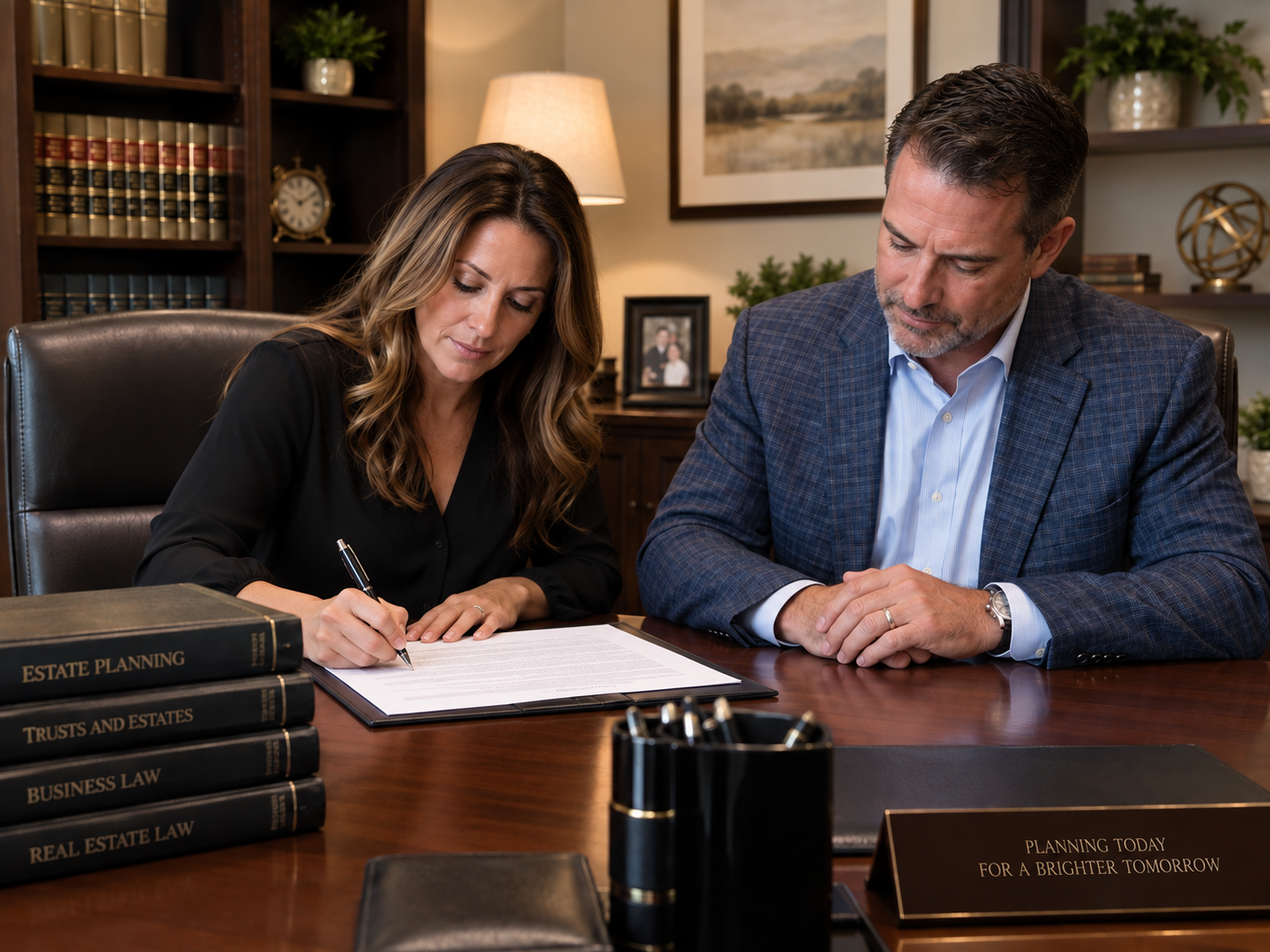
Real-world planning
Estate Planning in Tulsa Should Work in Real Life
A technically sound estate plan can still be difficult for a family to use.
Imagine someone has carefully prepared estate planning documents, but the originals are locked in a safe no one else can access. The successor trustee lives several states away. One child knows which attorney prepared the documents. Another does not. The family has also forgotten about a small piece of inherited Oklahoma property.
The documents themselves may be fine.
The problem is practical.
A useful estate plan should consider what happens after everything is signed.
- •Who knows where the documents are?
- •Who understands the role they have been given?
- •Who knows which financial institutions are involved?
- •Who would know about inherited land, mineral interests, a safe-deposit box, or a business interest?
- •Does the person you named actually have the temperament and availability to handle the responsibility?
Estate planning is partly about preparing legal documents. It is also about reducing unnecessary confusion for the people you trust.
Choosing the Right Person Matters More Than Choosing the Obvious Person
People often assume the oldest child should serve as personal representative, trustee, or financial agent.
Sometimes that works well.
Sometimes the oldest child is organized, responsive, and comfortable handling paperwork. Sometimes the child who lives five minutes away avoids conflict, hates administrative tasks, and would rather not have the responsibility.
Palmer Estate Law looks at more than birth order.
A better question is whether the person you are naming is trustworthy, willing, organized, available, and able to follow through.
It can also help to think about family dynamics.
- •Will this person communicate clearly with siblings?
- •Can they make decisions without creating unnecessary conflict?
- •Are they comfortable dealing with financial institutions and professionals?
- •Would they actually want the role?
One person does not always need to handle every responsibility.
The right choice is the person who can realistically do the job, not simply the person whose name feels most obvious.
Wills in Tulsa: More Than Deciding Who Gets What
A last will and testament can address important decisions such as who should receive certain property, who should serve as personal representative, and who a parent wishes to nominate as guardian for minor children.
But those are not the only questions worth asking.
A good planning conversation may also include:
- •What happens if the person you named cannot serve?
- •Are your children still minors, or did you create your current will when they were young?
- •Does your will reflect your current marriage and family structure?
- •Do you own property that may transfer outside your will?
- •Are there personal belongings with significant sentimental value that could create disagreement?
- •Have the people you named moved, died, or become less appropriate choices?
A will can be an important part of an estate plan, but it does not necessarily control everything a person owns.
A Will Does Not Necessarily Control Every Asset You Own
This is one of the most important estate planning concepts for families to understand.
Someone can have a perfectly valid will and still own assets that transfer another way.
Depending on the circumstances, property may pass based on:
- •How the asset is titled
- •A beneficiary designation
- •A payable-on-death designation
- •A transfer-on-death arrangement
- •Trust ownership
- •Joint ownership
- •Other legal mechanisms
Consider someone who signs a will dividing everything equally among three children.
Years earlier, that same person named only one child as beneficiary on a financial account and never changed the designation.
The will and the account may not be operating under the same set of instructions.
This is why estate planning should look at the entire picture rather than treating the will as the plan itself.
The Estate Plan Is Only Part of What Your Family Will Need
A family can have well-drafted estate planning documents and still struggle because nobody knows where anything is.
The legal plan and the practical handoff are two different things.
If someone had to step in tomorrow, would they know where the original documents are stored?
- •Would they know which financial institutions you use?
- •Who prepares your taxes?
- •Whether you have life insurance?
- •Whether there is a safe-deposit box?
- •Who keeps the books for your business?
- •Whether you own mineral interests or inherited land?
- •Which properties are owned individually, jointly, or through a business?
- •Who your attorney, CPA, insurance professional, or financial adviser is?
Palmer Estate Law encourages clients to think about the information surrounding the plan, not only the signed documents.
You do not need to create a massive inventory of everything you own.
But the people you trust should not have to reconstruct your financial life from old mail, email accounts, and half-remembered conversations.
A good plan should reduce detective work.
Trusts in Tulsa: Start With the Situation, Not the Document
Some people arrive already convinced they need a trust.
Others are equally convinced they do not.
Palmer Estate Law does not start with, "Which package do you want?"
The better starting point is the client's situation.
- •What property do you own?
- •How is it titled?
- •Who are you trying to protect?
- •Do you own real estate beyond your primary residence?
- •Do you own a business?
- •Are there children from a prior relationship?
- •Is avoiding probate an important goal?
- •How much complexity are you comfortable managing?
A revocable living trust can be a useful planning tool, but it is not automatically better than a will-based plan.
For some clients, a straightforward plan makes the most sense.
For others, their property, family structure, business interests, or planning goals may make a trust worth considering.
The structure should fit the life, not the other way around.
A Trust Is Only as Useful as the Way It Is Implemented
Creating a trust is an important step.
It is not necessarily the last step.
A client can sign a revocable living trust and still create problems later if property ownership and account arrangements are never reviewed.
Imagine someone creates a trust and then, over the next several years, buys another property, changes banks, opens a new investment account, and acquires a business interest.
If those changes are never considered in connection with the trust, the family may eventually discover that the plan does not work exactly as expected.
That does not mean the trust was the wrong choice.
It means a trust should be treated as part of a larger system.
Property ownership, account designations, business interests, beneficiary choices, and estate planning documents should work together.
Tulsa Families Often Own More Than the House They Live In
A person's primary residence is usually the first property discussed during an estate planning meeting.
It should not always be the last.
Oklahoma families may also own:
- •Family land
- •Rental property
- •Inherited acreage
- •Mineral interests
- •A partial interest in property owned with relatives
- •Business-related real estate
- •Property acquired decades earlier
- •A second home or recreational property
These assets can be easy to overlook.
Someone may live in South Tulsa but still own an inherited interest in land in another Oklahoma county.
Another person may receive occasional royalty checks connected to mineral interests they inherited years ago.
Someone else may own a small percentage of family property with several siblings.
These are exactly the kinds of details that can disappear from the conversation when estate planning is reduced to answering questions on a standard form.
A useful plan starts with what you actually own.
Mineral Interests Can Be Easy to Forget
Oklahoma families sometimes inherit mineral interests or fractional ownership interests that quietly remain in the family for generations.
They may not feel significant.
A person might receive an occasional royalty payment and never think of the interest as part of their estate plan.
But even a small or rarely discussed ownership interest can be worth identifying.
There is also a practical question.
- •Would anyone else know the interest exists?
- •Would your family know where to find the records?
- •Would they know which company sends the royalty payment?
Estate planning is often about details like these.
Business Owners Need Their Estate Plan and Business Documents to Work Together
A business owner may have an excellent personal estate plan and still have unanswered questions about the business.
For example:
- •Who has authority if the owner becomes incapacitated?
- •What does the operating agreement say about ownership transfers?
- •Are there other members or partners?
- •Who has access to business banking?
- •Who handles payroll?
- •Who knows the accountant?
- •Who can locate contracts, passwords, tax records, and insurance information?
- •What happens to the ownership interest after death?
The answers may involve more than the will or trust.
For someone who owns an LLC or closely held company, the estate plan and business documents should be considered together rather than as completely separate projects.
Blended Families Often Need More Thoughtful Planning
Second marriages can create estate planning goals that pull in different directions.
A person may want to provide financial security for a spouse while also preserving property for children from a prior relationship.
Both goals may be important.
The challenge is making sure the plan reflects what the person actually intends.
Questions can become more complicated when spouses bring separate property into the marriage, own property together, have children from previous relationships, or have very different financial circumstances.
This is not simply a question of choosing a will or choosing a trust.
It starts with deciding what you want to happen and identifying potential areas of conflict before documents are prepared.
Adult Children Living Outside Oklahoma Can Change the Practical Side of Planning
It is common for Tulsa parents to have adult children living in other states.
One may be in Texas. Another may be in Colorado. Another may have moved to New York or California.
Distance does not automatically prevent someone from serving in an important estate planning role.
But it can affect the practical side of the decision.
- •Would that person be comfortable handling the responsibility?
- •Are they organized?
- •Would another family member be better suited for certain tasks?
- •Does the plan give them enough information to make their job manageable?
The person who lives closest is not automatically the best choice.
Distance is simply one factor worth thinking about.
Estate Planning Is Also About What Happens While You Are Alive
People naturally associate estate planning with death.
Some of the most important planning questions arise during life.
- •What happens if you are hospitalized and cannot manage your finances?
- •Who can communicate with financial institutions?
- •Who can handle important transactions?
- •Who can speak with medical professionals?
- •Who knows where the necessary documents are located?
- •Who would realistically be able to step in without creating unnecessary confusion?
Powers of attorney and health care planning can be important parts of an estate plan because they address situations that may happen long before an estate is ever administered.
Flat-fee pricing
What Does Estate Planning Cost in Tulsa?
One reason people put off estate planning is that they have no idea what the conversation is going to cost.
Palmer Estate Law publishes standard estate planning pricing because clients should be able to understand the general investment before deciding whether to move forward.
That transparency also makes the will-versus-trust conversation more useful.
Clients can see the actual difference between a standard will-based plan and a trust-based plan and ask a better question:
What am I getting for the additional investment, and do I actually need it?
For many standard estate planning matters, Palmer uses flat fees rather than leaving clients to wonder how many billable hours a document or conversation will create.
Current standard pricing includes:
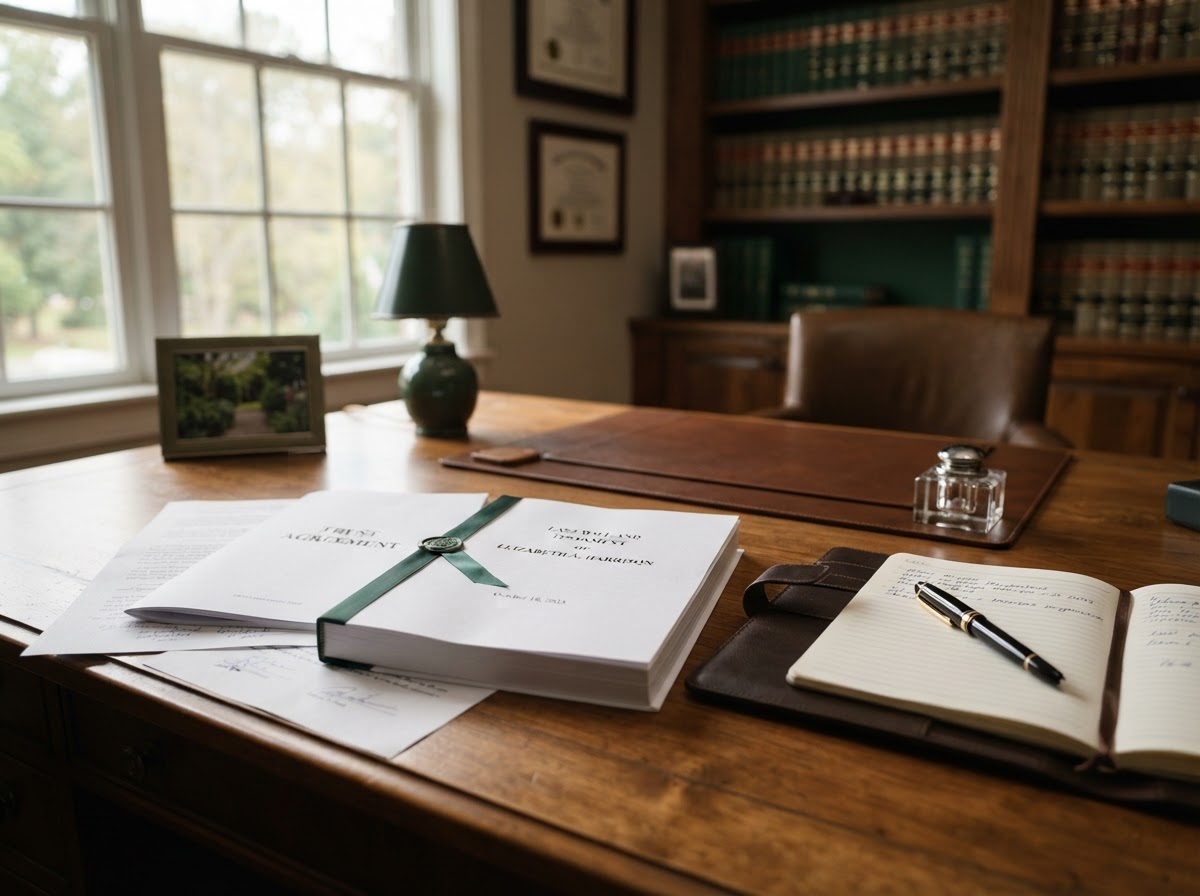
Palmer Estate Law · Flat-Fee Estate Planning
Trust-Based Estate Plan
$3,000 for a couple
$2,000 for a single individual
A standard trust-based estate plan may include a revocable living trust, pour-over will or wills, financial and health care powers of attorney, an advance directive, guardian nominations when applicable, deed preparation for Oklahoma real estate being transferred to the trust, business-interest assignments when applicable, and assistance with trust funding and asset coordination.
Will-Based Estate Plan
$1,600 for a couple
$1,200 for a single individual
A standard will-based estate plan may include a last will and testament, financial power of attorney, health care power of attorney, advance directive, and guardian nominations when applicable.
Individual Estate Planning Services
Will Only: $800
Powers of Attorney: $500 single / $700 couple
Transfer-on-Death Deed: $500
Quit-Claim Deed: $350
Not every matter fits neatly into a standard package. More complex planning may require individualized pricing.
Probate and trust administration fees are determined based on the circumstances of the particular matter.
Pricing may change, so Palmer Estate Law's pricing page should always be treated as the current source for fees.
How Palmer Estate Law Thinks About a Will-Based Plan Versus a Trust-Based Plan
The decision between a will-based plan and a trust-based plan should not start with which document sounds more sophisticated.
It should start with what the client is trying to accomplish.
A younger Tulsa homeowner who owns one house, has straightforward accounts, and wants a sibling to inherit may have very different needs from a married couple with children from prior relationships.
A business owner may have additional coordination issues.
Someone with inherited Oklahoma land or mineral interests may need to think about property that rarely comes up in everyday life.
Someone else may simply want the most straightforward plan that still accomplishes the goal.
The useful questions are things like:
- •What do you own?
- •How is it owned?
- •Who should receive it?
- •Who would step in if you could not manage things yourself?
- •Are you comfortable with probate?
- •Do you want additional structure around how assets are managed?
- •How much ongoing administration are you comfortable with?
The answer should come from the facts, not from a predetermined preference for one document.
Your Estate Plan Should Not Depend on Everyone Remembering What You Meant
Families often say things like:
- •"Everyone knows what Mom wanted."
- •"The kids will work it out."
- •"My oldest knows where everything is."
- •"We've already talked about it."
Sometimes that works.
Sometimes memories are different.
Relationships change. People move. The person who knew where everything was may die first.
A well-organized estate plan reduces the number of important decisions that depend entirely on family members remembering informal conversations.
Clear documents and accessible information can make an already difficult situation easier to manage.
Reviewing Your Estate Plan After Life Changes
An estate plan can be completely appropriate when it is signed and become less useful years later because life changed.
Events that may be worth reviewing include:
- •Marriage
- •Divorce
- •Birth or adoption of a child
- •Death of a spouse or beneficiary
- •Children reaching adulthood
- •A significant change in assets
- •Starting or selling a business
- •Purchasing additional real estate
- •Receiving inherited property
- •Changes in family relationships
- •Moving to Oklahoma
- •A change in the person you want serving as trustee, personal representative, agent, or guardian
A review does not automatically mean everything needs to be rewritten.
Sometimes the existing plan still accomplishes exactly what the client wants.
The important part is knowing rather than assuming.
Moving to Tulsa With an Estate Plan From Another State
People move to Tulsa with wills, trusts, and powers of attorney that were prepared somewhere else.
Those documents should not automatically be thrown away simply because someone moved.
They also should not automatically be placed in a drawer for the next twenty years without another look.
Moving to Oklahoma can be a useful time to review the documents along with the person's current property, family structure, beneficiary choices, and planning goals.
It may turn out that the existing plan still fits.
There may also be parts worth updating.
The point of the review is to find out.
Tulsa Probate and Why Property Ownership Matters
Having a will does not automatically mean an estate will avoid probate.
Whether probate is required can depend on what the person owned, how property was titled, beneficiary designations, trust ownership, and other circumstances.
Two Tulsa residents could have almost identical wills and very different estate administration experiences because their assets are structured differently.
That is another reason estate planning should look beyond the documents themselves.
When probate is required for a Tulsa County estate, the matter generally proceeds through the Tulsa County District Court.
Families dealing with an estate after someone's death can learn more about Palmer Estate Law's probate services.
What Palmer Estate Law Wants Clients to Understand Before Signing Anything
Estate planning should not feel like signing documents you barely understand because someone told you that you need them.
Before a plan is finalized, Palmer wants clients to understand the role each document is meant to play.
That includes knowing:
- •What the documents are designed to accomplish
- •Who has been given authority
- •What responsibilities those people may have
- •Which assets may be controlled by the estate plan
- •Which assets may transfer another way
- •What still needs to happen after signing
- •Where the important documents will be stored
- •When the plan should be reviewed again
The goal is not to make the client an estate planning lawyer.
The goal is to make sure the client understands why the plan looks the way it does and what practical steps still matter after the documents are signed.
What Should You Think About Before an Estate Planning Meeting?
You do not need to arrive with your entire financial life organized into a perfect binder.
It helps to begin thinking about a few questions.
- •Who are you trying to protect?
- •Who depends on you?
- •Who would you trust to handle financial responsibilities?
- •Who would you trust to carry out your wishes after your death?
- •Who would you trust to make medical decisions if you could not?
- •What real estate do you own?
- •Do you own inherited land or mineral interests?
- •Do you have business interests?
- •Do you have retirement accounts or life insurance?
- •Are there children from a prior relationship?
- •Are any beneficiaries minors?
- •Does anyone in the family have circumstances that may require additional planning?
- •Do you already have estate planning documents?
- •Where are your important documents kept?
- •Who would know where to look if something happened to you?
Those questions often reveal more about the right planning approach than simply asking whether someone wants a will or a trust.
Why Tulsa families choose us
Why Tulsa Families Choose Palmer Estate Law
Palmer Estate Law takes a practical approach to estate planning.
Attorney Allie Palmer works directly with clients to understand what they are trying to accomplish before deciding which documents or planning tools may fit.
That means looking at more than the family tree.
- •Property ownership matters.
- •Business interests can matter.
- •Beneficiary designations can matter.
- •Who is being asked to serve matters.
- •How easy the plan will be for the family to use later matters.
Allie's accounting background also brings an additional financial perspective to conversations involving property, business interests, asset coordination, and estate administration.
The goal is not to create the most complicated plan possible.
It is to create a plan the client understands, one that reflects the client's actual life, and one that is practical enough to work when someone eventually has to use it.
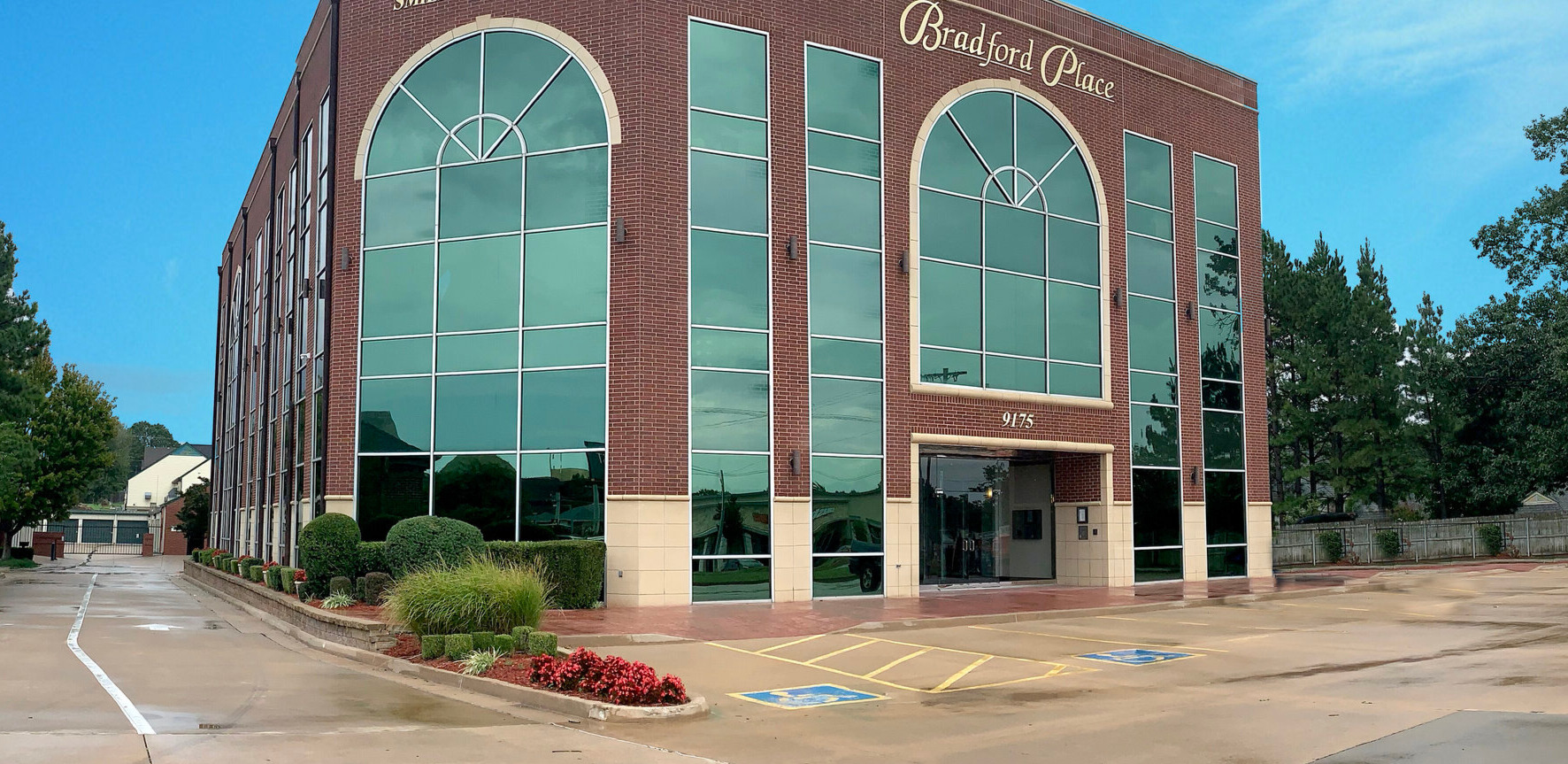
Palmer Estate Law · South Tulsa Office Exterior
Estate Planning Services for Tulsa, Oklahoma
Palmer Estate Law provides estate planning and related legal services from its South Tulsa office.
Estate Planning
Create a coordinated plan around your family, property, goals, future decision-making needs, and the people you trust.
Wills
Prepare or update a last will and testament addressing beneficiaries, personal representatives, guardianship nominations when appropriate, and other important planning decisions.
Trusts
Explore whether a revocable living trust or another trust-based planning structure may fit your circumstances and how the trust should coordinate with the assets you actually own.
Powers of Attorney
Plan for situations in which someone may need authority to assist with financial or health care decisions during your lifetime.
Probate
Understand the Oklahoma probate process and what may happen when an estate requires court administration after a death.
Trust Administration
Learn about the responsibilities that can arise when a trustee begins administering a trust after a death or other triggering event.
Frequently Asked Questions About Estate Planning in Tulsa
Talk With a Tulsa Estate Planning Attorney
You do not need to know whether you need a will, a trust, or another planning tool before scheduling a conversation.
That is part of what the conversation is for.
Palmer Estate Law helps Tulsa families think through estate planning in practical terms.
- •What do you own?
- •Who are you trying to protect?
- •Who would actually be able to step in for you?
- •What information would your family need?
- •What documents already exist?
- •What would make things easier if someone else eventually had to handle your affairs?
If you are creating your first estate plan or reviewing documents you already have, schedule a consultation with attorney Allie Palmer, or send us a message.
Visiting Palmer Estate Law in South Tulsa
Palmer Estate Law is located in Bradford Place at 9175 S Yale Ave #300, near 91st Street and Yale Avenue in South Tulsa.
The office is directly across the 91st & Yale area from Whole Foods Market and is less than a mile from the Creek Turnpike, making it convenient for clients coming from South Tulsa, Jenks, Bixby, and surrounding communities.
If you are coming from the Creek Turnpike, use the Yale Avenue exit and head north toward the 91st Street area. Bradford Place is located on South Yale Avenue, across the street from Whole Foods Market.
For the most accurate route from your starting point, use the office address in your preferred navigation app:
9175 S Yale Ave #300, Tulsa, OK 74137
This page provides general information about estate planning in Oklahoma and is not legal advice. Estate planning decisions depend on individual facts and circumstances. Viewing this website, submitting a form, or contacting Palmer Estate Law does not by itself create an attorney-client relationship.