
A trust only works when it is built right and properly funded.
Revocable Living Trusts in Tulsa, Oklahoma
A revocable living trust can be a useful estate-planning tool, but having a trust document is not the same thing as having a trust that actually works.
At Palmer Estate Law, we help Tulsa families decide whether a revocable living trust makes sense for what they own, how their family is structured, and what they want to happen if they become incapacitated or pass away. Just as important, we help coordinate the assets that need to work with the trust after it is signed.
Not everyone needs a trust. The goal is not to put every client into the most complicated estate plan. It is to choose the right structure and make sure the plan works the way it was intended to work.

Attorney Allie Palmer · Palmer Estate Law
What Is a Revocable Living Trust?
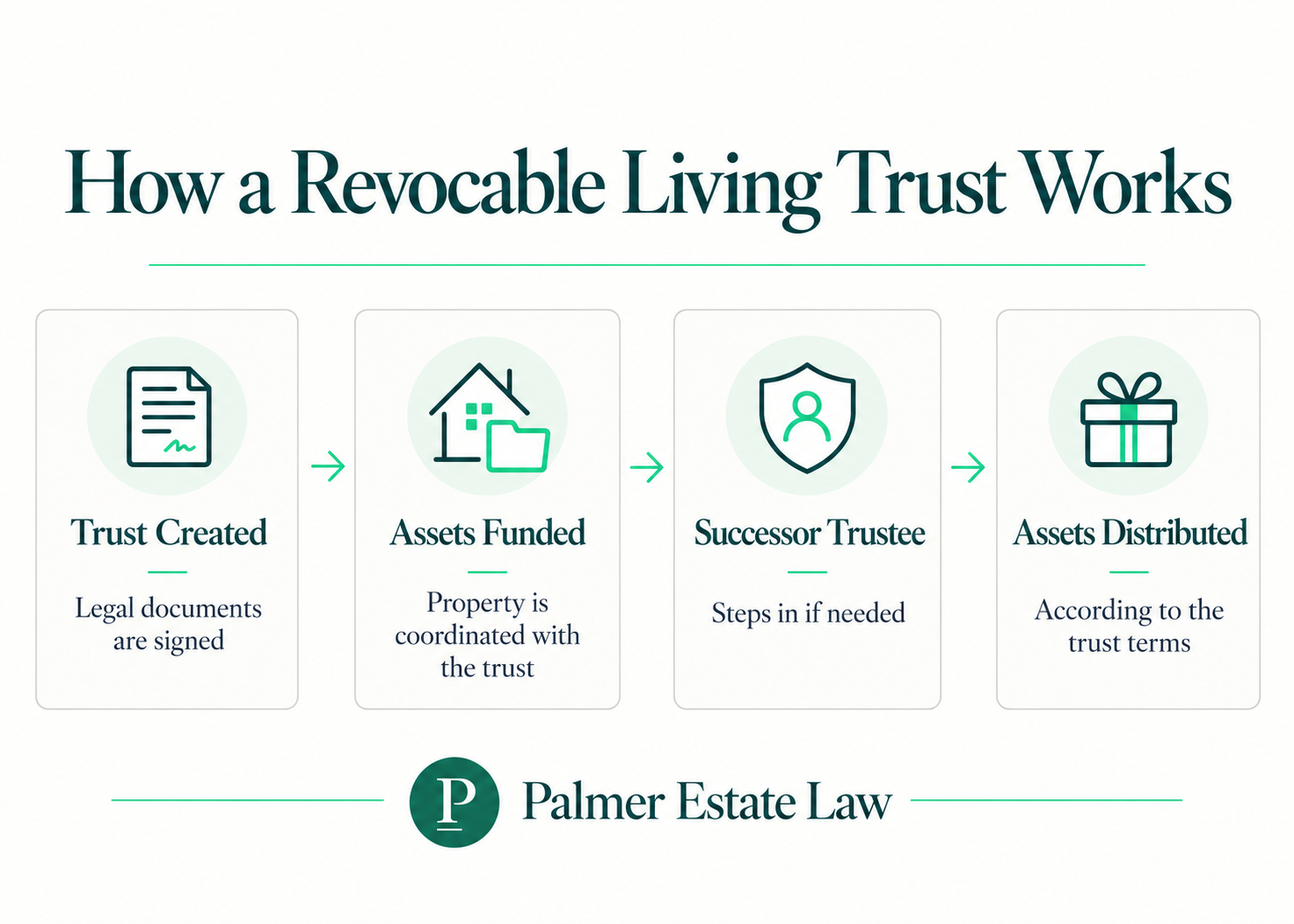
A revocable living trust is a legal arrangement created during your lifetime to hold and manage property.
The person creating the trust is generally called the grantor or settlor. While you are alive and able to manage your affairs, you can typically serve as your own trustee and remain in control of the property held in the trust.
Because the trust is revocable, you can generally amend or revoke it while you are living and have capacity.
You also name a successor trustee who can step in if you are no longer able to manage the trust or after your death.
That ability to provide for ongoing management is one reason a living trust can accomplish things a will alone cannot.
How a Revocable Living Trust Works · Palmer Estate Law
Why Tulsa Families Use Revocable Living Trusts
A will is an important estate-planning document, but a will does not itself avoid probate. It directs how probate property should be handled after death.
A properly structured and funded revocable living trust can allow property held in the trust to be administered by the successor trustee rather than passing through probate.
That can become especially important when someone owns:
- Real estate in more than one state
- Rental or investment property
- Oklahoma mineral interests
- Business or LLC interests
- Assets that need continued management for beneficiaries
- Property they want administered privately through the trust rather than through a probate proceeding
The Oklahoma Bar Association explains that trusts can be particularly useful when someone owns real property in multiple states because property properly held in trust may help avoid separate probate proceedings in those states.
But the decision is not simply “trust versus will.”
Two people with similar net worth can need very different estate plans depending on the type of property they own, where it is located, how their assets are titled, and who will eventually receive them.
That is why we look at the full picture before recommending a trust.
A Trust Only Works With the Property It Controls
Signing the trust is only part of the process.
Property that is intended to be governed by the trust generally needs to be coordinated with the trust appropriately. Depending on the asset, that may involve changing title, preparing a deed, assigning a business interest, or reviewing how an account is owned.
This is commonly called trust funding.
For example, a couple might sign a revocable living trust but leave their home titled individually. If the property was supposed to be held in the trust but was never transferred, the trust document by itself may not accomplish the intended probate-avoidance goal for that property.
The same coordination issue can arise with:
- Real estate
- Bank and brokerage accounts
- Business interests
- Mineral interests
- Newly acquired property
Retirement accounts and life insurance require particular attention because they are often governed by beneficiary designations rather than simply by the dispositive provisions of a separate trust. The IRS confirms that retirement-plan benefits generally pass according to the beneficiary designated under the procedures of the applicable plan.
Palmer Estate Law treats asset coordination as part of the planning conversation, not something that should be forgotten after the documents are signed.
Oklahoma Real Estate and Mineral Interests
Real estate is one of the areas where proper trust funding matters most.
If Oklahoma real estate is intended to be owned by a trust, transferring it usually requires a properly prepared and recorded deed.
Mineral interests deserve the same attention.
Oklahoma families often inherit royalty or mineral interests that are easy to overlook because they may have been passed down through multiple generations or relate to property in another part of the state.
Those interests should be identified when the estate plan is created so the attorney can determine how they should be coordinated with the trust.
Owning real property in another state creates an additional issue. Oklahoma Bar guidance explains that probate real estate located in another state can require ancillary administration there. Properly planned trust ownership may help avoid that additional probate process, depending on the law of the state where the property is located.
When a Will May Be Enough
A revocable living trust is not automatically the best choice for every Tulsa family.
Someone with a relatively simple estate may be well served by a properly drafted will combined with powers of attorney, advance directives, beneficiary designations, and other appropriate planning documents.
For example, a person whose assets consist primarily of one Oklahoma residence, ordinary financial accounts, and retirement accounts with current beneficiary designations may have different planning needs from someone who owns rental property, a business, mineral interests, or real estate in several states.
Some factors that may point toward a simpler estate plan include:
- A straightforward family structure
- Limited real-estate holdings
- Current beneficiary designations
- No business or investment real estate
- No need for long-term management of an inheritance
Other circumstances may make a trust more useful, including:
- Property in multiple states
- Business ownership
- Rental property
- Mineral interests
- A blended family
- Beneficiaries who should not receive an inheritance outright
- A desire for more continuity if you become incapacitated
The right answer depends on your actual assets and family circumstances, not simply the size of your estate.
How a Revocable Living Trust Fits Into an Estate Plan
A trust does not replace every other estate-planning document.
A trust-based estate plan will often include several coordinated documents, which may include:
- A pour-over will
- A financial power of attorney
- Health-care planning documents
- Beneficiary-designation review
- Deeds or assignments needed to coordinate property with the trust
Each document handles a different job.
For example, a trust primarily addresses property placed under its terms. A financial power of attorney can give another person authority to handle certain financial matters outside the trust. Health-care documents address medical decision-making rather than property ownership.
The goal is for those documents to work together rather than contradict one another. Learn more about how these pieces fit on our estate planning page.
Choosing a Successor Trustee
Your successor trustee is the person or institution that can take over management of the trust when you are no longer serving.
That is not merely an honorary title. The trustee may eventually need to gather assets, manage accounts, communicate with beneficiaries, pay expenses, work with tax and legal professionals, and distribute trust property according to the trust terms.
When choosing someone, consider whether that person is:
- Organized
- Dependable
- Comfortable handling financial matters
- Able to communicate with family members
- Willing to follow the trust rather than make decisions based on personal preferences
It is also wise to name one or more backup trustees in case your first choice cannot serve.
Some families choose an individual family member. Others may consider a professional or corporate trustee depending on the size and complexity of the trust.
We discuss the practical side of the role with clients so the decision is based on who can actually do the job.
Can a Revocable Living Trust Be Changed?
Generally, yes.
One of the primary characteristics of a revocable living trust is that it can generally be amended or revoked while the person who created it is living and has the legal capacity to make changes.
That flexibility matters because estate plans are rarely created once and then left untouched forever.
A review may be appropriate after events such as:
- Marriage or divorce
- A birth or death in the family
- Moving to Oklahoma from another state
- Buying or selling significant property
- Starting or selling a business
- Changes in beneficiaries
- Changes in the people named as trustees or other decision-makers
Sometimes the appropriate change is a trust amendment. In other cases, a more substantial restatement may make sense.
Why Trust Funding Matters at Palmer Estate Law
One of the biggest differences between creating a trust and creating an effective trust-based plan is what happens after the documents are drafted.
Palmer Estate Law does not treat the signed trust as the end of the process.
We help clients identify the assets that need attention, discuss how real estate and business interests fit into the plan, and address the funding steps needed for the trust structure to work as intended.
That can be particularly important for Oklahoma families with real estate, mineral interests, business ownership, or assets accumulated over many years.
A trust sitting in a binder is not the goal. The goal is an estate plan in which the documents and the assets work together. For a broader look at how we approach trust planning, see our trusts overview.
Palmer Estate Law Estate Planning Portfolio
Frequently Asked Questions
It depends on what you own, how your assets are titled, where your property is located, and who will eventually receive it. A will can be appropriate for many straightforward estates. A trust may become more useful when someone owns property in multiple states, owns a business or investment property, has mineral interests, wants continuing management for a beneficiary, or has other circumstances that make probate avoidance or ongoing asset management more important.
A properly funded revocable living trust can allow assets held in the trust to be administered outside probate. Property left outside the trust may still be subject to probate depending on how the property is owned and whether another nonprobate transfer method applies. Oklahoma Bar guidance specifically distinguishes probate property from property transferred through mechanisms such as a funded trust.
The trust generally cannot control property that was never properly placed under its ownership or otherwise coordinated with it. That is why funding is a separate and important part of trust planning.
An existing trust may continue to be useful after a move, but it should be reviewed to determine whether it still fits your assets, family circumstances, and Oklahoma law. A review can also identify whether Oklahoma real estate, mineral interests, or newly acquired property needs additional coordination.
A revocable living trust can generally be amended or revoked while you are living and have capacity. Major life changes, new property, business changes, or changes in beneficiaries or trustees are all good reasons to review the plan.
In many revocable living trusts, the person creating the trust serves as the initial trustee and continues managing the trust property during life. A successor trustee is named to step in later if necessary.
Talk With a Tulsa Revocable Living Trust Attorney
A revocable living trust can be an effective part of an estate plan, but the document itself is only one piece of the process. Palmer Estate Law helps Tulsa families determine whether a trust fits their circumstances, prepare the appropriate documents, and coordinate the property that needs to work with the trust. Attorney Allie Palmer works directly with clients throughout the planning process, with clear explanations and published flat-fee estate-planning options.
Palmer Estate Law · 9175 S Yale Ave #300, Tulsa, OK 74137 · Serving Tulsa, Bixby, Broken Arrow, Jenks & beyond